
A featured contribution from Leadership Perspectives: a curated forum reserved for leaders nominated by our subscribers and vetted by the Construction Tech Review Advisory Board.

Maxima Latvij
Future of Shopping-Maxima taps into Artificial Intelligence (AI) to make stores more human-centric, and now safer during the outbreak
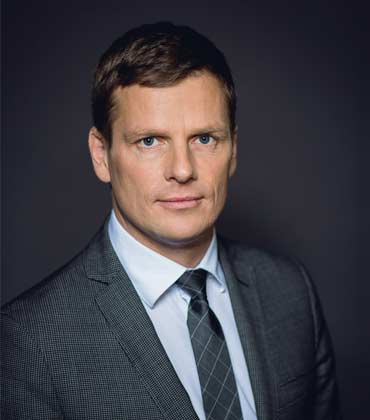
For a bit of daydreaming—do you still fancy fully robotic shops? Or you would rather prefer a human-centric environment where technology is more subtle, a backbone for your operation running in the background, and supporting your people, and your customer?
Fully automated shops that are managed by artificial intelligence and that optimize their operations on a daily basis are no longer a matter of science fiction. These are ideas that are already on the agenda of businesses, to streamline our operations and maximize our revenue.
AI can learn anything and do anything, faster, better, and cheaper than people can, but there is always the issue of values. What assignments and priorities do we, as people, assign to AI solutions so that they serve us, not vice versa?
Maxima is piloting AI to leverage human potential—we are part of the largest retail chain in the Baltic region with more than 30,000 staff, our holding organization spans across Europe, the CIS, and Scandinavia, and any optimization we achieve will have a major impact on our business. So we carefully look into more efficient management of stores, which helps our clients, faster, more convenient and better shopping processes, which help our customers, and a better and optimal set of logistics and business processes, which help the community in which we operate. AI solutions, moreover, will create new human habits, and that is why we must be particularly careful when thinking about the jobs that we will assign to AI's unlimited capabilities.
Well, we had over 15 percent revenue growth last year across the group—it required numerous initiatives—both in strategic, tactical, and routine or day-to-day approaches. We have a very customer-centric industry—300, 000 shoppers are guests in our stores every day in Latvia alone, and they make several billion buying decisions every year. Each of those buying decisions may be steered by multiple factors, and retailers are keen to keep good track of them. The industry is already well geared to harness technology such as customer movement tracking, automatic gender, age, emotional mood recognition, eye movement recognition, and this is Big Data in the true sense of the concept.
The best environment for AI solutions is one in which the system can learn. By this, I mean a large set of data and transactions which allow AI to analyze what is happening, draw conclusions, and make relevant decisions.
AI can look at millions of data points at stores so as to anticipate where queues will form, which shelves will soon need replenishment of the favorite items of shoppers, which routes will allow our cars to consume the least fuel, and even which parts of the store will have the dirtiest floor. At Maxima Latvija, we are taking these AI advantages into account, and we are gradually introducing them in various aspects of the work of our retail outlets. Furthermore, we tapped into this potent solution to better manage the Covid outbreak, months before it reached our stores. This was enabled by our newly introduced emergency management and early warning protocols. As our teams analyzed the first learnings from the outbreak in China in January, we realized we will require analysis of extremely large datasets of customer movement, concentration, cluttering, and crowding, to produce knowledge-based preventive measure, and ensure safety in our shops. Not only we achieved the result for ourselves, but we also became the first point of contact for authorities in Latvia, who consulted us for best guidance in public health in retail chains, and we proudly shared our expertise for best available health and safety initiatives. It is a paradox, however, that an AI system that was incepted to maximize revenues, was minimise used to minimize and even out customer flows, and revenues. It is critical, however, that it offered knowledge-based recommendations and guidance to authorities, and enabled much more efficient restrictions to Latvian retailers compared to those in the surrounding regions, a offered a healthier result for the customer, and the business.
The best environment for AI solutions is one in which the system can learn
The use of AI solutions as a way of modernizing Maxima stores is an ongoing process. The most visible application of AI at this time is self-service checkout, which our clients have been using actively for more than 10 years, as well as cash registers with contactless payment options, which is an innovation from more recent years. Without clients noticing, we have very quickly optimized the operations of our cash registers and the speed of services, because the latest AI technologies offer ongoing information to store managers about queues of people at cash registers, thus helping to avoid the emergence of long lines.
Not all of the technological improvements at Maxima stores are as easily noticed by shoppers. There are less visible innovations that are based on AI and that substantially improve the company's operations. The routine job of monitoring shelf content, for instance, is now done by technologies that are integrated into the existing video observation system. Our larger shops also have a digital system to identify foodstuffs that are about to expire, thus helping store personnel to reduce food waste. Maxima has also been the first retailer in the Baltic States to introduce electronic price tags on several thousand items, thus making life easier for employees and ensuring transparent, timely, and precise information to our clients.
We expect there to be changes in this area over the next few years. Self-service cash registers will become more modern and user-friendly, and it is quite possible that robots will take over the job of ensuring order and cleanliness at our stores. Retailers are already looking hard at shops without cash registers at all because observations at Maxima Latvija are that some 70 percent of transactions in evening hours pass through the self-service registers. The concept of a shop without any salespeople at cash registers at all is just a matter of time.
As we look at the rapid development of technologies and the opportunities that are offered by artificial intelligence, it is safe to say that the next decade will be exciting for shoppers and retailers alike. It will be critically important in this process to remember that the priorities and goals of AI are determined by us so as to offer greater benefits to our clients, as opposed to relying just on the results of a passionless algorithm.

